
+86 139 5134 9332 customer601@sunhongco.com
 English
Views: 0 Author: Site Editor Publish Time: 2026-09-30 Origin: Site


A leaking steam joint in your paper machine is rarely just a minor maintenance nuisance. It constantly bleeds valuable steam into the atmosphere. It creates uneven moisture profiles across your continuous paper web. Eventually, it forces an unscheduled and costly downtime event. Plant engineers and maintenance managers face a tough daily choice. Do you rebuild your existing units? Or do you upgrade to higher-performance models entirely? Making this decision requires objective troubleshooting. You need verifiable operational parameters to justify any replacement. This guide breaks down the root causes of premature seal failure. We will explore diagnostic frameworks to help you separate part failures from systemic issues. You will learn how to evaluate modern replacements effectively. You will also discover installation practices to maximize your operational efficiency and minimize emergency repairs.
Premature leakage is most commonly driven by installation misalignment, thermal shock, or the degradation of the rotary joint graphite ring.
Evaluating a replacement requires matching seal materials to specific dryer section pressures and speeds.
Upgrading a paper machine rotary joint can reduce steam consumption and extend MTBF (Mean Time Between Failures) if specific installation tolerances are met.
Routine visual and acoustic diagnostics prevent catastrophic failures and unplanned shutdowns.
Ignoring a minor steam leak carries heavy financial consequences. Small bypasses escalate quickly under continuous operation. They affect multiple layers of your production efficiency.
Paper webs run continuously. Shutting them down costs thousands of dollars per hour. Emergency joint replacements kill profitability instantly. Your maintenance crew scrambles to isolate the steam block. Your production operators sit idle. You lose raw material during the web break. Restarting the machine consumes additional hours just to stabilize the dryer temperature profile again.
Even minor seal bypasses decrease thermal efficiency in the dryer section. Steam escapes before transferring its latent heat into the drying cylinder. Your boiler must work harder to maintain system pressure. You burn significantly more fuel. Over a single fiscal quarter, a few leaking joints inflate your energy bills drastically. They also overload your condensate return lines.
Pressurized steam on the production floor presents serious safety hazards. It expands violently upon hitting the ambient air. It creates immediate burn risks for operators passing nearby. Dense vapor plumes obscure visibility around rotating machinery. Safety inspectors routinely cite visible steam leaks as regulatory compliance violations. You risk hefty fines if you leave these hazards unaddressed.
Understanding exactly why a seal fails helps you prevent recurring issues. Mechanical wear, installation errors, and thermal stress play equal roles.
The Rotary Joint Graphite Ring naturally wears down over time. It provides essential dry lubrication between the rotating and stationary faces. However, particulate contamination accelerates this degradation. Condensate scale, pipe rust, or chemical debris act like sandpaper. They quickly score the smooth carbon face. Once grooving occurs, steam bypasses the seal entirely.
Improper installation places uneven loads on the sealing face. Angular misalignment tilts the stationary internal pipe against the rotating housing. Offset misalignment creates an eccentric wobble. Both conditions force the seal open on one side. This causes premature bypass. Machine vibration amplifies this uneven contact. It physically hammers the seal until it fractures.
Rapid startup and shutdown cycles destroy seal integrity. Operators sometimes open steam valves too fast. Hot steam aggressively hits cold cast iron and brittle carbon. The sudden expansion cracks the sealing materials. Pressure spikes during unstable boiler operations push the seal beyond its mechanical limits. They compromise the internal springs and the housing materials.
Siphons extract water from the dryer. Improper siphon clearance allows excessive condensate buildup inside the cylinder. A flooded cylinder drastically increases mechanical drag. It sloshes at low speeds. It rims heavily at high speeds. This heavy water load induces violent internal vibration. It severely stresses the Rotary Joint assembly until the seals fail.
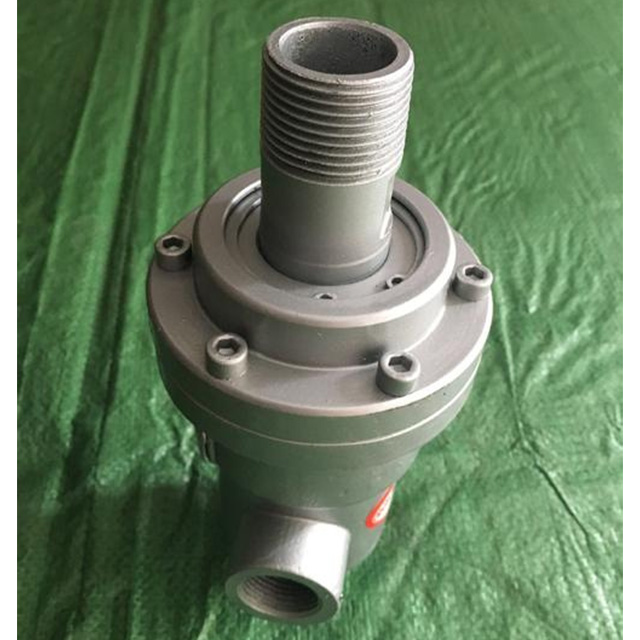
You must accurately diagnose a leak before ordering parts. You need to know if the hardware failed naturally or if a system flaw destroyed it.
Listen and look closely at the operating unit. Weeping steam indicates a minor seal groove or weak spring tension. Blowing steam signifies a complete seal fracture. Chattering noises indicate dry running. A lack of fluid lubrication causes the carbon to bounce against the metal face. Grinding sounds suggest bearing failure or severe misalignment.
Analyze your condensate system to rule out external causes. Use sight glasses to observe the flow. Live steam blowing through the glass indicates a failing steam trap, not necessarily a bad joint. Measure temperature differentials across the trap. A localized leak usually drops the immediate cylinder surface temperature. A systemic trap failure elevates return line temperatures.
Examine the physical condition of a removed seal ring. It tells a distinct mechanical story.
Uneven wear: Indicates angular misalignment or bent rigid piping.
Deep grooving: Points to abrasive media or severe scale in the steam lines.
Blistering: Suggests flashing condensate or extreme thermal shock.
Chipped edges: Usually results from rough handling during installation.
Observed Indicator | Probable Root Cause | Recommended Action |
|---|---|---|
Chattering noise during rotation | Dry running / Lack of lubrication | Check steam pressure and trap function |
Uneven wear on seal face | Angular or offset misalignment | Realign piping and check journal runout |
Deep radial grooves on carbon | Particulate contamination | Flush steam lines and install strainers |
Sudden blowing steam at startup | Thermal shock fracturing the seal | Implement gradual temperature ramp-up |
Replacing an obsolete unit requires a strategic evaluation. You must match the new hardware to your current operating parameters.
You must choose the right structural configuration for your machine speed and load.
Feature | Rod-Supported Design | Self-Supported Design |
|---|---|---|
Mounting Method | External support rods fixed to the machine frame | Mounted directly onto the cylinder journal |
Vibration Tolerance | High (isolates the joint from cylinder movement) | Moderate (moves with the journal) |
Space Requirement | Requires significant external clearance | Compact and requires minimal space |
Ideal Application | High-speed, high-vibration paper machines | Slower machines or tight installation spaces |
Seal materials dictate performance limits. Standard carbon graphite handles normal temperatures and pressures well. It offers excellent dry lubrication. Antimony-impregnated graphite provides enhanced strength for higher steam pressures. Silicon carbide faces offer supreme resistance against abrasive wear. Evaluate these options strictly against your maximum operating temperatures and boiler pressures.
Selecting a reliable supplier prevents early failures. Ask vendors for verified MTBF (Mean Time Between Failures) data. Request their specific pressure-velocity (PV) limits for the proposed seal materials. Verify they follow ISO-compliant manufacturing standards. Upgrading to a modern Dryer Cylinder Rotary Joint ensures you receive engineered tolerances rather than generic aftermarket guesswork. A rigorous audit protects your production schedule.
Even the best engineered seal will fail if installed poorly. Precision installation procedures are strictly non-negotiable.
Never rely on visual alignment. You must use precision measurement tools before torqueing any bolts.
Clean the cylinder journal thoroughly to remove old gasket material and rust.
Mount a dial indicator on the machine frame.
Measure the radial and axial runout of the journal while rotating the cylinder.
Shim the support brackets until alignment falls within the manufacturer's specified tolerance.
Torque the mounting bolts evenly in a star pattern to prevent housing distortion.
Rigid piping pushes and pulls against the joint housing as it heats and expands. This strain instantly breaks the internal seal alignment. You must isolate the Paper Machine Rotary Joint from rigid piping stresses. Install flexible metal hoses between the supply headers and the joint. Ensure these hoses install naturally. Never twist or stretch them to bridge a gap. Proper hose installation absorbs thermal expansion effortlessly.
Never hit a newly installed joint with full steam pressure instantly. Define a standard ramp-up procedure. Open the steam bypass valves slowly. Allow the cast iron housing and internal components to reach operating temperature gradually. This careful thermal seating prevents seal fracture. It allows the carbon faces to mate perfectly against the metal mating surfaces without inducing thermal shock.
Resolving steam leaks requires more than simply swapping out broken parts. You must identify the systemic root causes driving the failures. From analyzing wear patterns to verifying siphon clearances, objective diagnostics save you time and money. When choosing a replacement, match your seal materials precisely to your operational pressures and machine speeds. Eliminate installation errors by mandating dial indicators and flexible hose isolation. Take action today. Conduct a comprehensive steam joint audit across your entire dryer section. Consult a specialized engineer before standardizing your next maintenance upgrade. Proactive choices protect your profit margins and ensure a safer production floor.
A: A properly installed unit typically lasts between 18 and 36 months. Lifespan depends heavily on operating speed, steam pressure, and alignment precision. High-speed machines experience faster wear. Regular vibration analysis and routine visual inspections help extend this operational window significantly. Avoid blanket guarantees, as environmental contamination directly affects actual durability.
A: Rebuilding is cost-effective if only the internal carbon seal shows wear. However, you should replace the entire unit if the metal housing is warped or the bearing surfaces are heavily scored. Compromised housings prevent new seals from seating properly. A full replacement eliminates recurring maintenance labor on heavily degraded bodies.
A: No. You cannot reuse or reverse a damaged ring. During operation, the carbon material wears down and physically mates precisely to its opposing metal wear surface. Flipping it introduces an unmatched, uneven surface. This instantly creates steam bypass gaps. You must always install completely new seals to ensure a tight, leak-free face.
