
+86 139 5134 9332 customer601@sunhongco.com
 English
Views: 0 Author: Site Editor Publish Time: 2025-05-28 Origin: Site


In the papermaking industry, sealing strips are critical components that ensure the efficient operation and longevity of machinery. Selecting the appropriate sealing strip materials is essential for optimizing performance and reducing maintenance costs. Among the various materials available, Ultra High Molecular Weight Polyethylene (UHMW) and graphite are two prominent options. This article provides a comprehensive comparison of UHMW and graphite sealing strips, focusing on their friction coefficients, speed suitability, and overall performance in industrial applications.
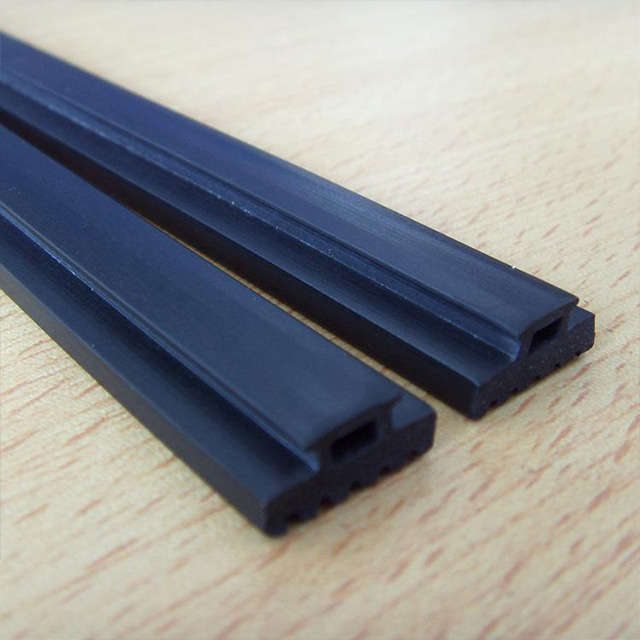
Sealing strips are used to prevent fluid leakage, reduce friction between moving parts, and protect machinery from contaminants. The choice of material affects the sealing strip's durability, efficiency, and compatibility with different operational conditions. UHMW and graphite are widely used due to their unique properties and suitability for demanding industrial environments.
UHMW is a subset of thermoplastic polyethylene with extremely long chains, resulting in a very tough material with high impact strength. UHMW sealing strips are known for their excellent abrasion resistance, low friction coefficient, and high chemical resistance. These properties make them suitable for applications where wear resistance and smooth operation are critical.
UHMW sealing strips offer several benefits:
Low friction coefficient reduces energy consumption and heat generation.
High impact strength enhances durability in high-stress environments.
Chemical resistance allows use in corrosive settings without degradation.
Self-lubricating properties minimize the need for additional lubrication.
Despite its advantages, UHMW has some limitations:
Lower temperature resistance compared to other materials may limit its use in high-heat applications.
Difficulty in machining due to its toughness can increase manufacturing costs.
Susceptibility to UV degradation requires protective measures in outdoor applications.
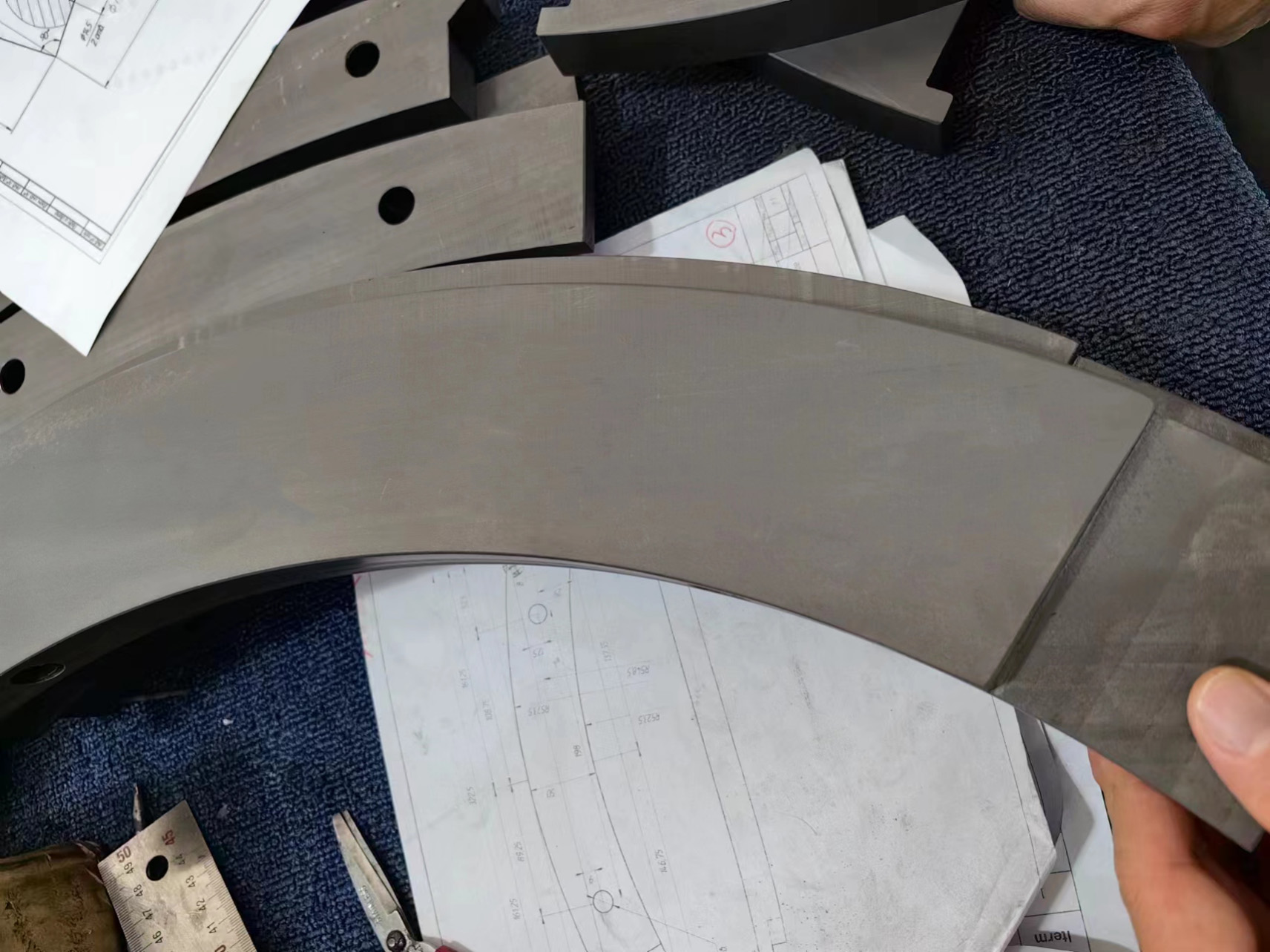
Graphite is a form of carbon known for its excellent thermal conductivity, high temperature resistance, and lubricating properties. Graphite sealing strips are ideal for applications involving high temperatures and pressures. They maintain structural integrity under extreme conditions and provide effective sealing performance.
Graphite sealing strips have several key benefits:
Exceptional temperature resistance allows operation in environments exceeding 500°C.
High chemical stability ensures compatibility with a wide range of substances.
Intrinsic lubricity reduces wear and extends the lifespan of machinery components.
Good compressibility and recovery properties enhance sealing effectiveness.
The use of graphite also presents some challenges:
Brittleness can lead to cracking under mechanical stress or impact.
Higher friction coefficient compared to UHMW may increase energy consumption.
Potential for oxidation at elevated temperatures requires consideration in design.
The friction coefficient is a crucial factor in selecting sealing strip materials. A low friction coefficient reduces energy losses, heat generation, and wear on both the sealing strip and the mating surface. UHMW sealing strips have a low friction coefficient, typically around 0.10 to 0.22, which contributes to efficient operation. In contrast, graphite sealing strips have a higher friction coefficient, ranging from 0.15 to 0.45, depending on the specific conditions.
Understanding the friction characteristics helps in predicting the performance and energy efficiency of the sealing system. Applications that require minimal frictional resistance may benefit more from UHMW materials.
Operating speed is another critical consideration. UHMW sealing strips perform well at moderate speeds, maintaining stability and reducing wear. However, at very high speeds, the material may experience thermal expansion and deformation. Graphite sealing strips are better suited for high-speed applications due to their thermal stability and ability to dissipate heat effectively.
When selecting a sealing strip, it's important to match the material's speed suitability with the application's requirements to ensure reliable performance and prevent premature failure.
Comparing UHMW and graphite sealing strips reveals distinct advantages and limitations for each material. UHMW offers low friction and excellent wear resistance, making it ideal for applications where smooth operation and longevity are desired. Graphite excels in high-temperature and high-speed environments, providing reliable sealing under extreme conditions.
The choice between UHMW and graphite depends on specific operational parameters such as temperature, speed, chemical exposure, and mechanical stress. Table 1 summarizes the key properties of both materials:
| Property | UHMW Sealing Strip | Graphite Sealing Strip |
|---|---|---|
| Friction Coefficient | 0.10 - 0.22 | 0.15 - 0.45 |
| Temperature Resistance | Up to 80°C | Up to 500°C |
| Chemical Resistance | Excellent | Excellent |
| Mechanical Strength | High Impact Strength | Brittle Under Impact |
| Speed Suitability | Moderate Speeds | High Speeds |
When selecting sealing strip materials, several factors must be considered:
For applications involving high temperatures, graphite sealing strips are preferred due to their thermal stability. UHMW may degrade or deform under such conditions.
Both UHMW and graphite exhibit excellent chemical resistance, but specific chemicals may interact differently. It's important to verify compatibility with the substances involved in the process.
UHMW's high impact strength makes it suitable for environments where mechanical shocks occur. Graphite's brittleness may lead to failure under similar conditions.
In applications where low friction and minimal wear are critical, UHMW sealing strips offer significant advantages. This can improve efficiency and reduce maintenance needs.
For high-speed operations, graphite sealing strips are more appropriate due to their ability to handle increased thermal loads without degrading.
Several industries have documented the performance of UHMW and graphite sealing strips:
In paper machines, sealing strips are used in vacuum systems and roll applications. A study showed that UHMW sealing strips reduced energy consumption by 15% due to lower friction, enhancing the overall efficiency of the paper production line.
Chemical plants requiring operation at elevated temperatures found that graphite sealing strips maintained integrity and performance where UHMW could not withstand the heat, ensuring continuous operation without frequent replacements.
UHMW sealing strips are favored in food processing equipment due to their FDA compliance and low friction, which reduces contamination risks and facilitates easier cleaning procedures.
Selecting the appropriate sealing strip material is a critical decision that impacts the efficiency, durability, and safety of industrial equipment. UHMW and graphite sealing strips each offer unique advantages. UHMW is ideal for applications requiring low friction coefficient and moderate speed suitability, while graphite excels in high-temperature and high-speed environments.
Understanding the specific needs of the application, including operating conditions and performance requirements, is essential. By carefully considering factors such as friction coefficient and speed suitability, industries can optimize their machinery performance and reduce maintenance costs. Continuous advancements in material science promise further improvements in sealing strip technologies, offering even more tailored solutions for industrial challenges.
For those looking to enhance their equipment's efficiency, exploring options like a UHMW sealing strip or a graphite sealing strip could provide significant benefits.
