
+86 139 5134 9332 customer601@sunhongco.com
 English
Views: 0 Author: Site Editor Publish Time: 2026-10-04 Origin: Site


For industrial processes relying on continuous steam heating, inefficient steam transfer ruins product quality. It also drives up energy waste. Facilities operating paper manufacturing, corrugating, or textile production face these precise challenges. Upgrading or replacing steam transfer components demands a careful approach. You must understand how modern equipment optimizes thermal efficiency. A high-performance Rotary Joint eliminates severe pressure drops. It also extends overall seal life. This guide breaks down essential mechanics for saturated and superheated steam applications. We will explore clear evaluation criteria for selecting reliable components. You will discover practical implementation realities to avoid costly installation mistakes. Our breakdown helps you transition from reactive repairs to optimized system performance.
Optimized Thermal Efficiency: Properly specified rotary joints eliminate steam blow-through and maintain consistent pressure, directly improving the surface temperature uniformity of rotating equipment.
Condensate Management: Integration with a siphon system is non-negotiable; efficient condensate removal prevents flooding and reduces drive-motor torque.
Predictable Maintenance: Advanced seal materials (e.g., antimony-impregnated carbon graphite) offer predictable wear rates, transforming catastrophic failures into manageable, scheduled maintenance.
Standard or legacy packing glands present a massive liability. They suffer from rapid wear during continuous operation. This degradation leads to hazardous steam leaks across the facility. Operators experience severe pressure loss. Unplanned downtime becomes a frequent, costly reality. You cannot rely on outdated packing technology for high-speed manufacturing. Plants need dynamic solutions to maintain production schedules. Modern sealing technologies solve these exact industrial bottlenecks.
A rotary joint creates a dynamic seal. It bridges stationary supply pipes and rotating equipment journals. Modern designs rely on highly engineered mechanical seal faces. These faces utilize either convex/concave or flat profiles. Steam pressure actively pushes these faces together. This internal pressure maintains strict seal integrity during operation. Carbon graphite rings press against polished metal surfaces. This creates a self-lubricating, fluid-tight barrier. The mechanism traps pressurized steam inside the roll. It effectively prevents dangerous atmospheric leaks.
Steam cycles introduce severe temperature fluctuations. Metal pipelines expand significantly as they heat up. A long steam pipe can grow several inches. Rigid connections quickly break under this immense strain. Modern joints accommodate this inevitable thermal expansion. They feature built-in axial movement capabilities. Spring-loaded seal assemblies absorb lateral shifts seamlessly. This engineering prevents critical piping strain. It also protects the mechanical seal from distortion. Your infrastructure remains intact even during rapid temperature swings.
Rotational friction drains drive-motor power. Traditional packing glands squeeze tightly around shafts. This excessive friction demands higher electrical loads. Balanced seal designs fix this issue entirely. They equalize internal hydraulic forces against the seal face. The joint rotates smoothly regardless of steam pressure. Lower friction directly reduces mechanical drag. Your equipment drive motors require less energy. This efficiency lowers your monthly power consumption significantly.
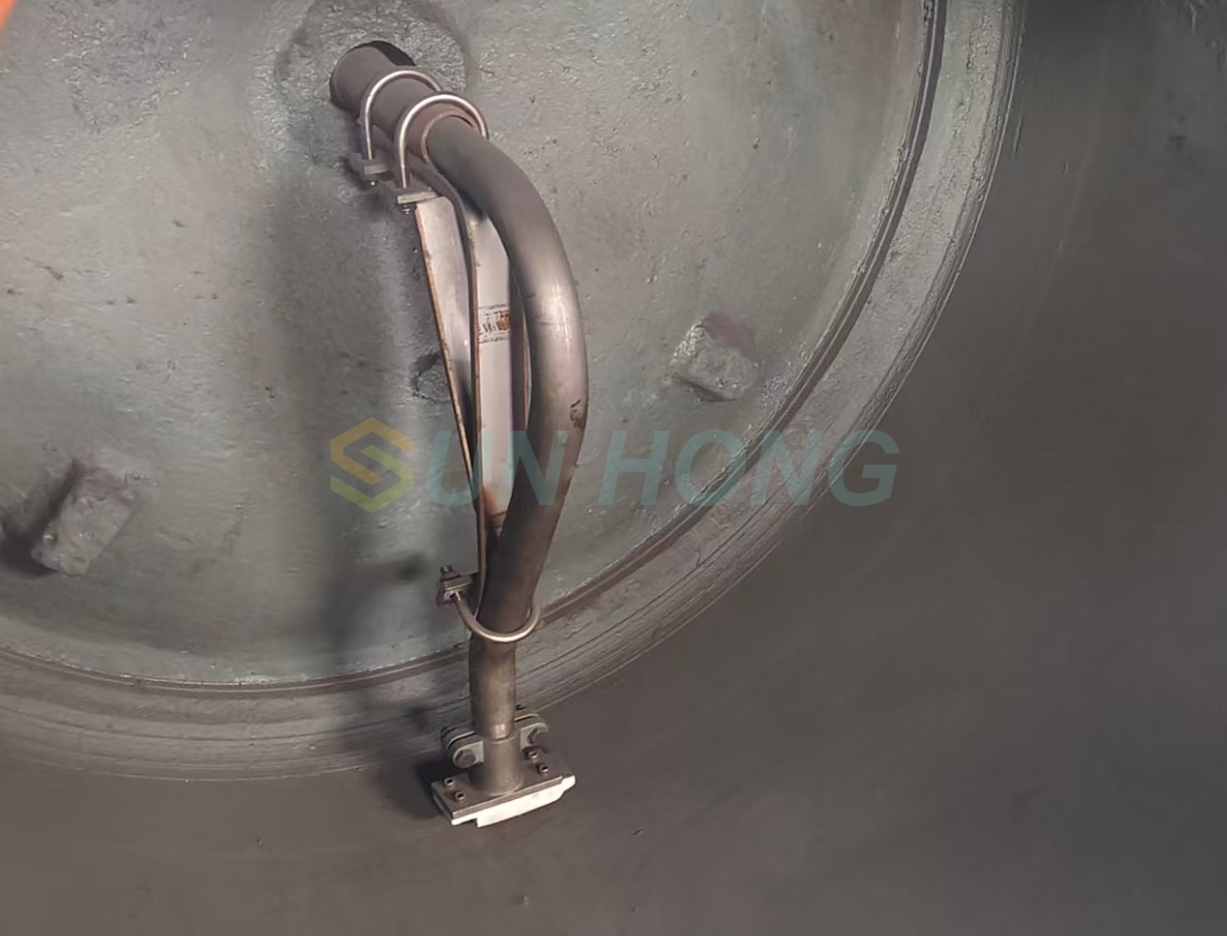
Delivering steam is only half the equation. Steam transfers latent heat into the cylinder shell. It immediately turns into liquid condensate. Accumulated condensate acts as a powerful thermal insulator. A thick water layer destroys heat transfer efficiency. Production speeds drop dramatically as temperatures fall. Uneven heating causes localized moisture streaks in paper webs. Removing this liquid quickly remains a top operational priority.
A correctly integrated Rotary Joint Siphon System resolves condensate buildup. These components work together in perfect synergy. Live steam enters through the outer annulus of the joint. It fills the drying cylinder. Simultaneously, condensate evacuates through a center siphon pipe. The system continuously purges the insulating water layer. Heat transfers directly into the metal shell again. This dual-flow mechanism keeps cylinder temperatures aggressively hot and uniform.
Choosing the right siphon dictates system success. Machine speeds dictate your specific selection.
Stationary Siphons: These remain fixed while the cylinder rotates. They excel in high-speed machines. Centrifugal force pushes condensate into a rimming layer. The stationary shoe scoops this water efficiently.
Rotary Siphons: These rotate alongside the cylinder shell. They suit lower speeds perfectly. Condensate tends to puddle at the bottom during slow rotation. A rotary siphon scoops this puddle during each revolution.
Comparison Chart: Siphon Selection Guide
Feature | Stationary Siphons | Rotary Siphons |
|---|---|---|
Ideal Speed Range | High speeds (above 400 m/min) | Low to moderate speeds |
Condensate Behavior | Handles rimming condensate | Handles puddling condensate |
Clearance Stability | Can deflect under heavy loads | Fixed rigidly to the shell |
Maintenance Access | Easier external adjustment | Requires internal cylinder entry |
Evacuating condensate requires precise differential pressure (DP). The return line pressure must sit below the supply line pressure. This exact difference creates a vacuum effect. It pulls liquid up the siphon pipe seamlessly. If DP drops too low, the cylinder floods completely. If DP rises too high, live steam exhausts directly into the return line. Maintaining strict differential pressure avoids massive energy waste.
Dryer cylinders represent a brutal industrial environment. Paper and corrugating machines run at punishing speeds. Heavy vibrations shake the equipment continuously. Steam joints operate 24 hours a day without rest. Substandard components fail rapidly under these harsh conditions. You must evaluate replacements against strict industrial benchmarks. Durability and continuous reliability matter above all else.
Moisture profiles dictate final product quality. A specified Steam Rotary Joint for Dryer Cylinder guarantees optimal thermal distribution. It sweeps the entire cylinder face with fresh steam. Consistent temperatures prevent damp spots in the paper web. You will experience fewer paper breaks on the machine. Uniform heating directly boosts production yields and limits scrap waste.
Joint support designs vary by application needs. You must evaluate structural integrity carefully.
Self-Supported Joints: These mount directly onto the rotating journal. Internal bearings handle the weight. They suit moderate speeds perfectly. Installation is generally fast and straightforward.
Bracket-Supported Joints: These mount to external machine frames. The bracket carries the joint weight. They relieve strain from the rotating journal. High-speed, large-diameter cylinders require bracket supports absolutely.
Aging machines drain facility profitability. Retrofitting them yields an impressive return on investment. Installing a modern Dryer Cylinder Steam Rotary Joint changes the operational math. It drastically reduces steam consumption per ton of product. You heat the web faster using less fuel. Heat transfer efficiency spikes upward immediately. The energy savings alone often pay for the upgrade within months.
Maintenance teams need clear visibility. Advanced joints include visual wear indicators. A metal pin extends outward as the carbon seal wears down. Technicians can measure remaining seal life instantly. You never have to dismantle the unit for inspection. This transforms facility maintenance. Teams shift from reactive emergency repairs to predictive planning. You order parts precisely when needed.
Never match a joint only to normal operating loads. System spikes happen unexpectedly. Verify operating parameters against maximum safety relief valve settings. The joint must handle these absolute maximums safely. Superheated steam requires distinct evaluations. It lacks moisture, running much hotter than saturated steam. Standard carbon seals burn up in superheated environments. Specify antimony-impregnated seals to handle extreme thermal loads.
Pressure vessels carry inherent safety risks. Exploding steam lines cause catastrophic injuries. Ensure your vendor supplies complete metallurgical certifications. The equipment must comply with ASME or PED pressure vessel codes. Untested cast metals contain hidden voids. These flaws rupture under sudden pressure spikes. Strict regulatory compliance mitigates facility risks completely. It also protects you during insurance audits.
Standard catalog parts often fail to fit legacy machines. Journal flange dimensions change over decades of modifications. Off-the-shelf parts might require expensive machine shop modifications. Evaluate vendors who offer customized flange adaptations. They tailor siphon clearances to your exact internal cylinder diameters. Perfect dimensional matching prevents prolonged installation downtime. Customization keeps your retrofit project firmly on schedule.
Rigid piping destroys rotary joints. It stands as the leading cause of premature failure. Thermal expansion forces steel pipes to push against the joint body. This force distorts the internal seal faces instantly. Steam blows through the resulting gaps. You must utilize flexible metal hoses. Install them on both steam supply and condensate return lines. Hoses isolate the joint from destructive pipe vibration. They absorb all thermal expansion safely.
Siphon shoe clearance demands absolute precision. Setting the shoe too close to the shell causes mechanical rubbing. The siphon grinds against the spinning metal, eventually snapping off. Setting the shoe too far away creates a different disaster. It leaves a thick insulating layer of water spinning inside. Condensate floods the cylinder and stalls heat transfer. Always follow manufacturer gap specifications strictly using specialized gauges.
Carbon seals require lubrication to survive. Live steam acts as this critical lubricant. Rotating a dry cylinder destroys the joint rapidly. The carbon ring generates massive friction against dry metal. Micro-fractures form within minutes. Dust sheds off the seal face. Always introduce steam before engaging the drive motors. Outline strict startup sequencing for your operators. Proper operational habits extend joint lifespans significantly.
Mechanical seal rings are highly engineered but fragile. Dropping a seal ring causes invisible micro-fractures. Shocking the joint with a hammer during installation guarantees failure. Handle all components with surgical care. Use vendor-supplied alignment tools to center the joint perfectly. Misalignment causes uneven wear patterns on the carbon ring. Professional installation guidelines remain crucial for long-term success. Train your mechanics on these specific handling protocols.
Common Mistakes to Avoid:
Using hard piping instead of flexible stainless steel hoses.
Ignoring visual wear indicator pins until a catastrophic blowout occurs.
Setting differential pressure too high, blowing live steam into return lines.
Applying pipe dope or heavy grease to mechanical seal faces.
Upgrading a steam rotary joint represents a major investment in thermal efficiency. It is never just a simple maintenance swap. Properly specified components stabilize cylinder temperatures and eliminate dangerous leaks. You stop wasting valuable steam energy immediately. The right siphon system removes condensate efficiently, dropping motor torque loads. Facility managers see immediate improvements in web moisture uniformity.
You must take deliberate next steps. Conduct a comprehensive steam joint audit on your existing equipment. Measure current pressure drops across every machine section. Consult with specialized manufacturers rather than generic parts catalogs. Request specific Mean Time Between Failures (MTBF) data for their components. Ask for relevant case studies matching your exact operational speeds. Application-specific engineering will ultimately secure your long-term machine reliability.
A: Single-flow joints provide steam into one side of the cylinder. They require a completely separate joint for condensate extraction on the opposite end. Dual-flow joints handle both tasks simultaneously. They allow steam supply and condensate return through the exact same joint on one single end of the cylinder.
A: Modern carbon graphite seals operate reliably for 1 to 3 years. This lifespan depends heavily on rotation speed and steam pressure. You must ensure proper installation without pipe strain. Continuous operation within rated temperature limits also prevents premature seal degradation and cracking.
A: Yes, it can fix uneven heating if condensate flooding causes the issue. Upgrading to a joint with a properly sized siphon system changes everything. It removes the insulating condensate layer continuously. This restores uniform surface temperatures across the entire cylinder face immediately.
A: Minor weeping sometimes occurs as flat mechanical seals bed in initially. However, continuous blowing steam indicates a severe problem. It usually means pipe strain is distorting the seal face. Missing flexible metal hoses or trapped debris between the seal rings also cause instant leaks.
